


What does it mean to age well in 2025? At what point in our lives should we begin to reflect on ageing, and why do the questions we most often ask centre on delaying its effects, rather than on how to age well together, in good mental and physical health? With UN projections estimating adults over 60 to make up 20 per cent of the global population by 2050, contemporary design continues to explore ways to integrate older adults into society in ways that foster social participation, health, and a sense of purpose.
With Dispersion as the theme of the 18th Gdynia Design Days, the festival explored the multitude and diversity of challenges imposed by design as a field. “For whom should we design?”, asked the festival organisers [Read more about the festival here]. And as such, The Art of Ageing exhibition presented in Gdynia back in June 2025, tackled the global demographic shift in such a context. We caught up with Aleksandra Majdzik-Cisowska and Izabela Serej, the curators behind the exhibition, to delve even more deeply into the questions of how architecture, modern technologies, and design can contribute to creating spaces that will inspire activity and social integration among this growing demographic.


Maria Sarna: In your exhibition The Art of Ageing, you emphasised the importance of both relationships and the autonomy of the elderly. How can we find a balance between promoting intergenerational relationships and respecting this autonomy?
Izabela Serej: The Art of Ageing exhibition in the Gdynia Film Centre during Gdynia Design Days raised one of the most crucial questions of our times: how do we want to age as a society? Ageing does not have to imply withdrawal or dependency. It can be full of relationships, agency, and choices – if we only create proper tools and spaces for people.
In our exhibition, we were particularly committed to showing that intergenerational relationships and the autonomy of the elderly are not in conflict; on the contrary, they can be mutually empowering. The key lies in creating an environment in which seniors can decide for themselves when and with whom they want to be without feeling isolated.
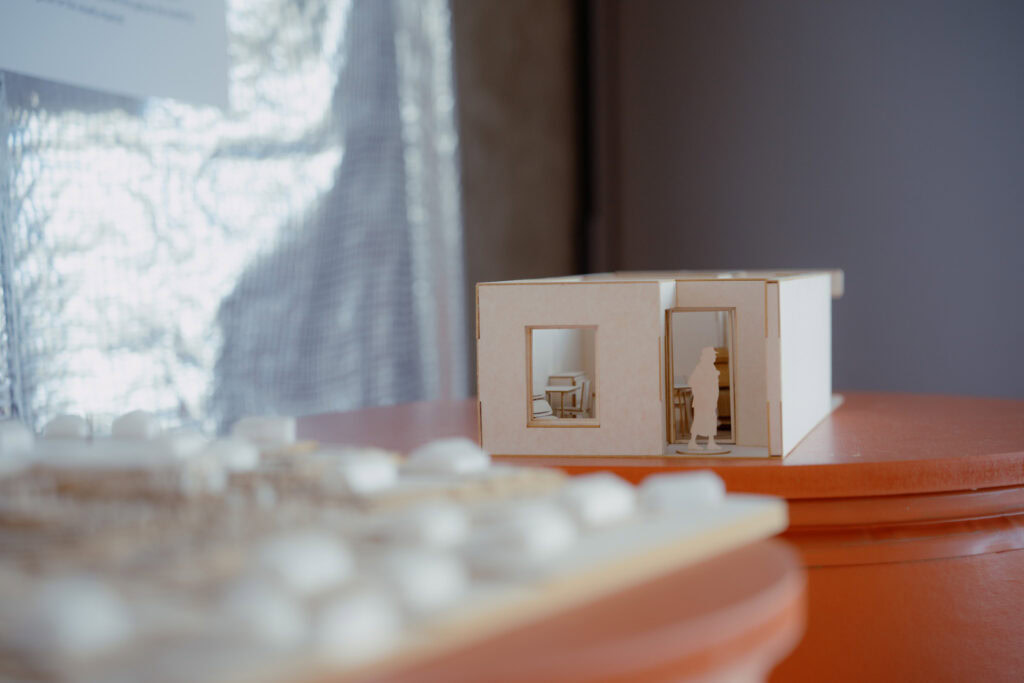
A good example of such an approach is the sheltered housing project on the Orląt Lwowskich estate in Nysa [Poland], designed by the PROLOG Studio and presented at our exhibition. As a building designed particularly for the elderly and people with disabilities, it combines privacy with an opportunity for interaction between neighbours. Each flat has a balcony overlooking the street, allowing the residents to be part of city life without leaving. Inside, there is a communal garden with a gazebo, a pergola, and shared space – accessible yet not imposing. This way, everyone can decide when they want to be alone and when surrounded by others.
A similar idea of support without overprotection is highlighted in the book Hack Care, also shown in the exhibition. This unique catalogue, created in Singapore by the Lien Foundation and design studios Lekker Architects and Lanzavecchia + Wai Design Studio, provides caretakers and families with simple and practical “hacks” for building a friendly home environment for people with dementia. It is not just functionality matter, but it’s also about allowing the elders to remain active participants in life, even when their health is deteriorating. One of the authors stresses that “designing is not only for architects – families also have the power to create spaces that work”.
Both the housing project by the PROLOG Studio and Hack Care prove that a balance between relationships and autonomy begins with intent listening to the needs of the elderly – not from the position of an expert, but by co-creating. The exhibition was an attempt to show that such a perspective change is possible and greatly needed.
“The Art of Ageing thus seeks to draw attention to these needs, as well as to inspire new, dedicated solutions. If even one product is created as a result of these efforts, we will deem it a great success.”
— Aleksandra Majdzik-Cisowska

M.S.: How can we understand notions such as universal design today in the context of demographic changes, which vary significantly across countries? Should we always strive for the universality of a product, or will it be inevitable that, in some environments, we will have to move towards a design aimed mainly at the older demographic?
Aleksandra Majdzik-Cisowska: Universal design is undoubtedly a valuable concept that allows for to creation of products that are accessible to the widest range of users. However, in the face of dynamic demographic changes, especially in rapidly ageing societies, universality might not be possible or sufficient.
There is a lack of many products and services dedicated to the elderly, or if they exist, they are not always adjusted to their real needs. Also, those products often look like medical equipment and are not beautiful, aesthetic, or pleasant to use. The group is marginalised and its challenges are often ignored. Therefore, in many cases, targeted design focused primarily on the elderly is necessary to better respond to their specific limitations and expectations.
The Art of Ageing thus seeks to draw attention to these needs, as well as to inspire new, dedicated solutions. If even one product is created as a result of these efforts, we will deem it a great success. The design must be based on a careful observation and understanding of the real needs of users. Even if the product is not fully universal, it’s still good as it’s addressed to those who really need it and whose quality of life can then be significantly improved.

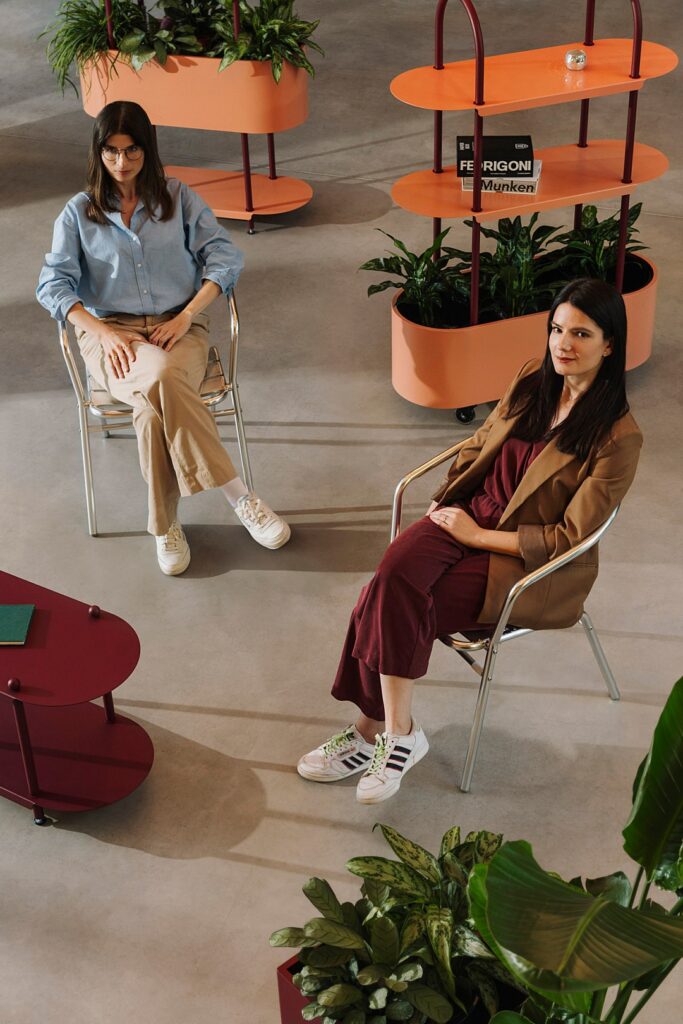
M.S.: In your recent LOOPO Green System project, you are providing space for nature in interiors. How are those seemingly different fields of your interests intertwined? How do you perceive the role of nature in the context of good ageing?
I.S.: Although the LOOPO Green System project and our efforts aimed at the elderly can seem thematically distant, they are connected by a common idea of caring for well-being and quality of life, both in an everyday sense and a long-term one. In both cases, the starting point was a question: what really makes a space serve us well?
Connecting with nature is one of the most universal and fundamental needs of a human being, regardless of age, condition, or lifestyle. We believe that the daily presence of greenery in our surroundings makes the space more beautiful and has a real impact on our mental, physical, and emotional well-being. And studies show that green reduces stress and cortisol levels, boosts concentration and regeneration, fosters creativity and may reduce the risk of depression.
LOOPO is a flexible modular system that incorporates spaces for plants into everyday furniture. It emerged out of the necessity to facilitate connection with nature, regardless of the available space, lifestyle, or stage the user is at. Since the very beginning, we wanted this system to go beyond nice aesthetics, but to realistically respond to changing needs, including those that come with age, mobility limitations or other health-related changes. LOOPO can grow and change with the user, and this flexibility is what we consider one of its biggest advantages.
The spaces we surround ourselves with should be designed with change in mind, acknowledging that our needs are not fixed and that life is a constant dynamic. A well-designed interior can support us through the years, regardless of whether we are in our thirties, fifties, or eighties. Greenery can have a unique role in this process. It is not only a decorative element, but something much deeper – a rhythm that calms, a stimulus for our senses, a natural anchor in a world that often gets too fast and too loud.
This is why designing for the elderly should not be limited to ergonomics and accessibility. It is about something more – creating spaces that give them a sense of safety, foster their relationships and support self-reliance, also thanks to daily contact with nature. Greenery, even in the simplest form, can be a valuable tool. This is why it is already so important to create spaces wisely, with the diversity of needs and quality of life at every stage in mind.
M.S.: The connection between the quality of housing and health, especially in the context of ageing, was already addressed by Edwin Chadwick in the 19th century. Over the years of experience in the fields of architecture and interior design, in which areas do you find we have made the most progress in designing the modern home in Poland?
A.M.C.: By far the greatest progress in the design of the Polish contemporary home can be seen in the increased understanding of the fact that residential architecture is not merely a response to functional needs, but that it also has a profound impact on the psychophysical health of its residents, especially the elderly and the vulnerable.
For years, the dominant housing model in Poland was that of the flat as a closed unit, characterised by narrow corridors, high thresholds, and a lack of thought about ageing. Today, we are seeing a real change. An excellent example of this is the PROLOG Studio’s Sheltered Housing project, which we are presenting at the exhibition. It is a well-conceived residential space designed particularly with elders and people with disabilities in mind. Thanks to its simple layout, entrances without thresholds, indoor garden, shared spaces, and subtle details, the project fosters self-reliance, orientation, and a sense of community among residents.
As society ages, loneliness becomes one of the most serious health issues. That is why contemporary home design is more and more often also about designing relationships. Initiatives such as senior cohousing are an inspiration for Polish communities, too. The senior cohousing in Rybnik presented at our exhibition was a great success, and there are plans for other places like this. The greatest progress is not about technology or formal innovations but about shifting the focus from designing buildings to designing well-being and community.
“This is why designing for the elderly should not be limited to ergonomics and accessibility. It is about something more – creating spaces that give them a sense of safety, foster their relationships and support self-reliance, also thanks to daily contact with nature.”
— Izabela Sarej
M.S.: In the context of this vision of the future of city living, how do the needs of the elderly interplay or clash with existing urban policies that have been designed with other marginalised groups in mind, such as the child-friendly city initiatives that many cities are implementing in the twenty-first century? How did you try to engage younger audiences with a subject that may seem so distant to them in your exhibition?
I.S.: The needs of the elderly and the youth are often interlocked if we look at them through the lens of quality of life, not age. Things that serve them well, such as accessibility, safety, greenery, and proximity to services, are equally beneficial for children, people with disabilities, or those experiencing a crisis. The problem is not the lack of shared needs, but the way cities are designed – often fragmentarily, with only one group in mind, instead of a holistic, cross-generational experience of everyday life.
In The Art of Ageing, we didn’t divide the audience by their age. We wanted to use a visual and narrative language which can reach a wide audience. We present ageing not as a subject ‘for others”, but as a process that affects each one of us. The aesthetics, stories of craftsmanship, and proximity to day-to-day topics were our tools in building bridges between generations. In that sense, the exhibition was an attempt at perspective change – the idea was not to talk about the elderly, but from their position, which allows younger viewers to empathise with their everyday life and see their own future in a new light.
A vital highlight of the exhibition was a chart prepared by LAB60+, entitled Longevity in Architecture, stressing that architecture can and should be designed with the stages of life in mind, and not purely with its current users. We demonstrated that space can function as a preventive health infrastructure that is supportive, adaptable, and understandable for every generation. This approach goes beyond traditional universal design. It talks about the longevity strategy – designing both for the future and with the future in mind. It was an important message for the younger viewers: we do not create “for the elderly” but for us in the future. There is no wall between the generations, only continuity of experience. Even the children visiting the exhibition could ask themselves: “How do I want to live in 30 years?”, “Is my city going to be ready for me then?”.

M.S.: You also mention the importance of inspiring mobility and general activity. A significant number of design solutions targeting older adults rightly address mobility limitations by offering the most practical approaches, such as automated lift chairs for home use or elevators integrated into new residential buildings and public facilities. But how can we also empower physical activity itself? What mobility-focused innovations did visitors encounter at your exhibition, and what kind of feedback did you receive?
A.M.C.: It is true that many design solutions for the elderly focus on compensating their limitations, and rightfully so. However, supporting physical activity and agency before their mobility is lost is equally important. At our exhibition, we presented practical tools such as the MultiSport Plus and MultiSport Senior cards, which genuinely encourage people over sixty to move and build a daily routine outside their homes.
A bit more provocative, but – as it turned out – a necessary and moving point was erotic toys. We showed that physical fitness is more than walking, as the body can also be a source of pleasure and presence in the world. The reactions varied, but they were mostly full of curiosity that this topic had been presented openly and respectfully, without any taboos.
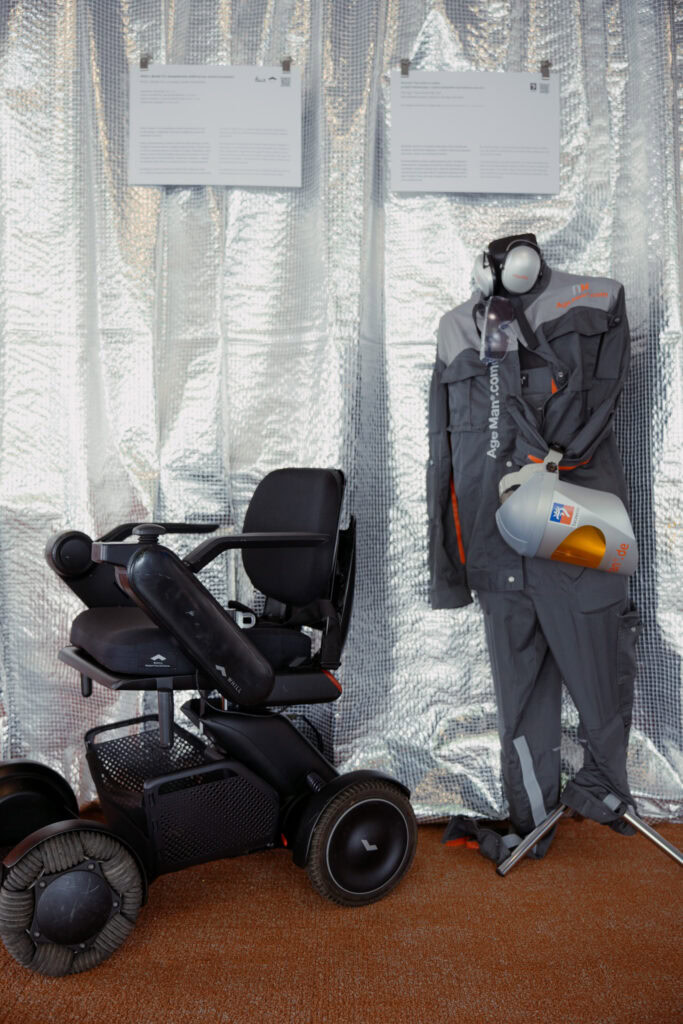
Another important element was the SOS Locon wristband, which increases the sense of security and independence and thus realistically supports the readiness to be active. The Integrale cutlery by Isabel Becker is, in turn, an example of a micro-innovation that restores fitness and dignity to everyday activities – ergonomic, aesthetically pleasing, and with no stigma. Finally, there was an old age simulator that allowed visitors to experience what their bodies might look like in 30–40 years. It was a powerful, empathetic experience that was both an eye-opener and a motivation to take care of ourselves right now.
The feedback was strong and emotional. We proved that mobility is not only a matter of technology, but mostly of freedom, independence, and bodily agency. And, also, that innovations in this area can – and should – be both functional and culturally brave.
M.S.: You have emphasised the need to acknowledge the creative potential of older adults. How did The Art of Ageing explore the possibilities of drawing attention to this value, which we too often neglect? Perhaps new technologies could play a role here?
I.S.: In The Art of Ageing, we wanted to emphasise that age does not exclude creativity; on the contrary, it can be its source. Presenting works and stories of older artists, we demonstrated that art has no metric and that experience and life wisdom add depth and authenticity to it.
A powerful symbol of this approach was the Happy kilim woven by elderly women from the Weavers’ Cooperative in Bobowa, following Danuta Paprowicz-Michno’s design from the early 1980s. With their great knowledge of craft and exceptional sensitivity, and the joint work of Agata Król and her daughter-in-law Agnieszka, who represent a new generation of weavers, it has become not only a piece of art, but, above all, a symbol of the transmission of knowledge and skills from one generation to the next. This process, full of patience, practice, and dedication, is equally important as the final result, especially in times when many traditional craft trades disappear.
We believe that such spaces in which seniors can share their experiences are invaluable. New technologies can support us in this, for instance, by documenting these processes and making them available to a wider audience. Nonetheless, the direct contact and respect for generational knowledge remain the key.
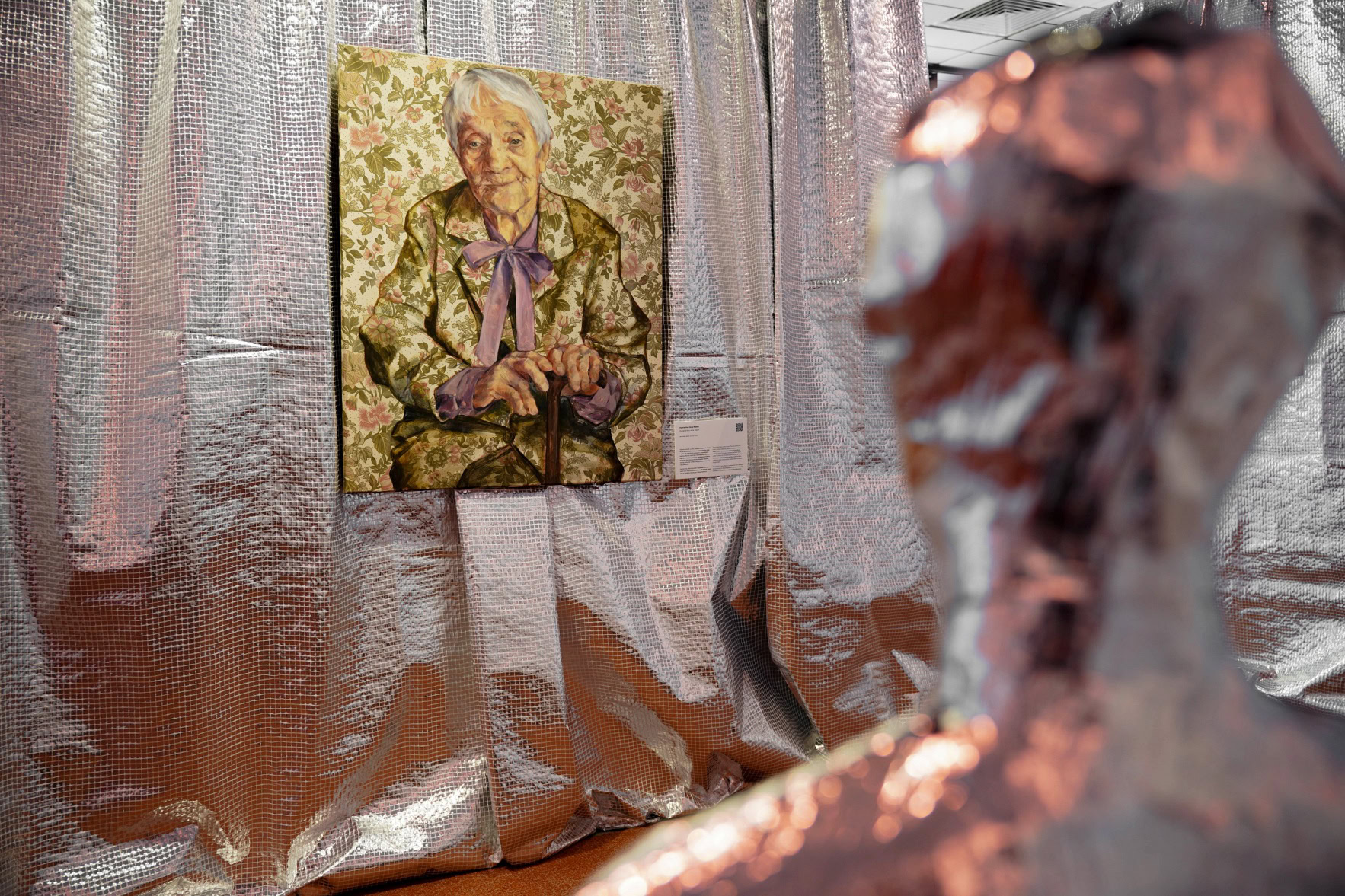
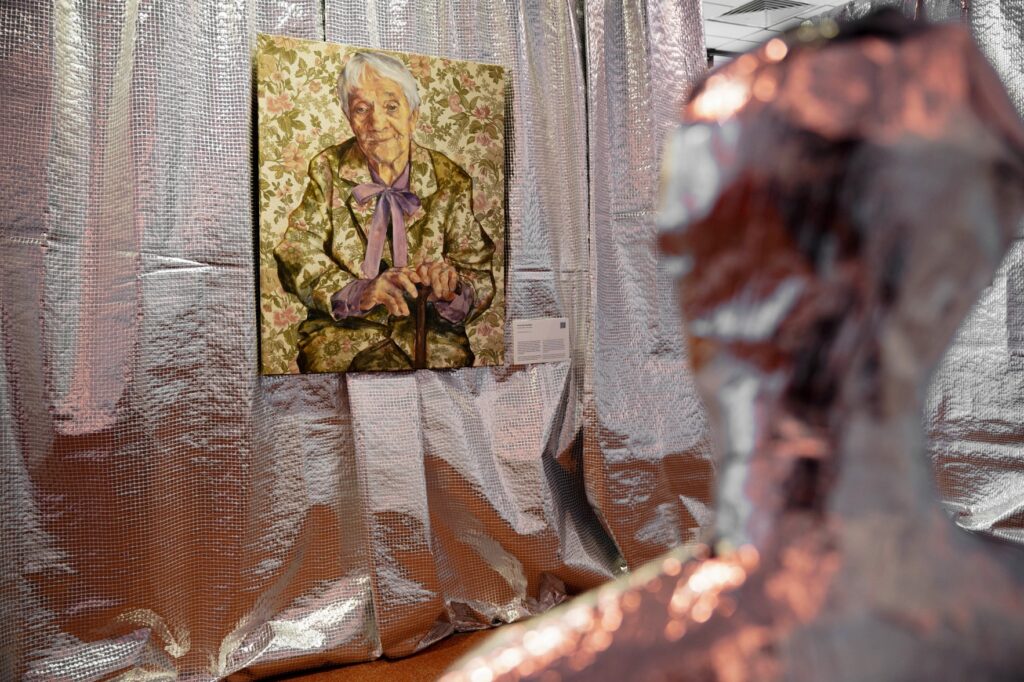
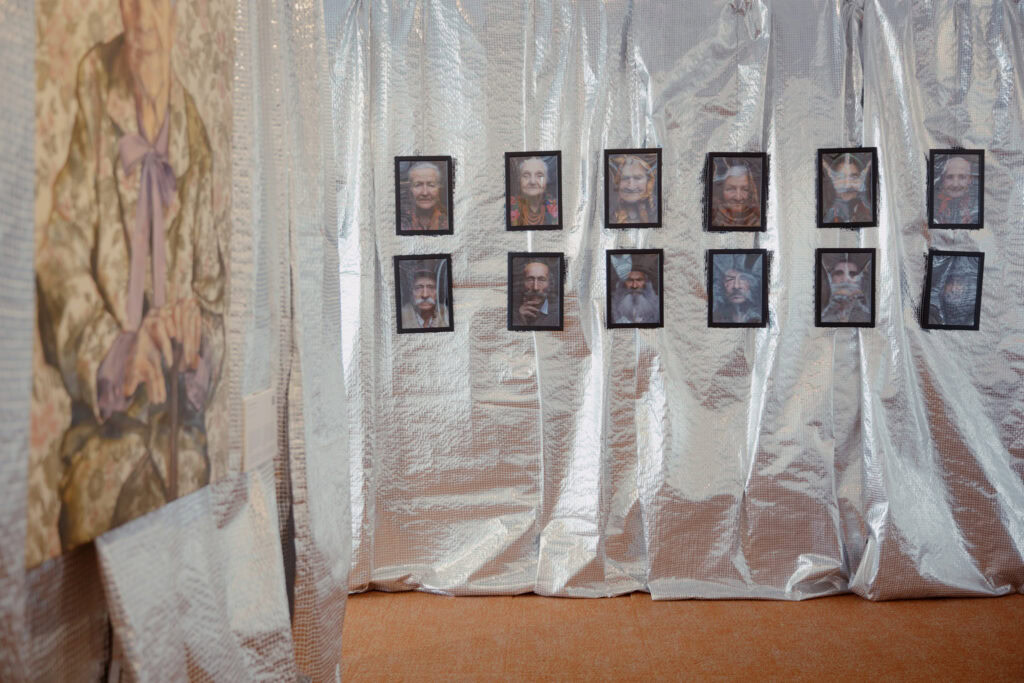
But the theme of visibility and strength of the elderly was also continued in other works. An exceptionally moving part of the exhibition was an installation with a painting by Monika Polak, depicting 100-year-old Anna Wójcik. The portrait became an allegory for the presence of the elderly in the public space, showing how they need to be seen, heard, and portrayed with tenderness and attention. Similarly, Bartłomiej Jurecki’s photographs from the Hard as a Rock and Strong as Halny series. They pictured the strength, personality, and authenticity of older inhabitants of Podhale – people who are as hard as a rock, but also full of warmth and openness, who still play an important role in their communities.
The exhibition proved that age does not close the doors to creation and activity. Quite the contrary, the experience can become a source of inspiration and a message for others. New technologies play a supporting role here, but it is primarily respect, visibility, and the establishment of spaces for intergenerational cooperation that allow older people to realise their full potential.
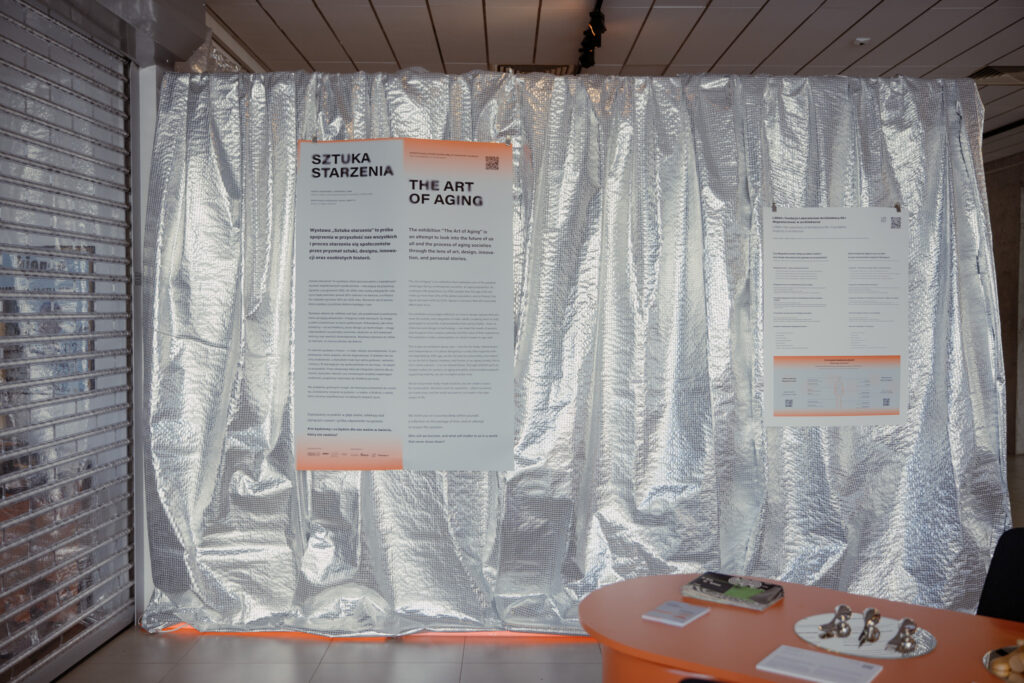
M.S.: Events such as the Sztuka Starzenia exhibition at GDD provide an opportunity for diverse audiences to understand the necessary changes through interaction with design, artwork, and personal narratives. In the future, what other spaces or platforms would you like to see raising this kind of awareness on the rapidly ageing population?
A.M.C.: It is crucial to involve older people in creating public awareness of the ageing population, as they are the ones who have the unique knowledge and experience that is difficult to convey only through technology. We imagine more and more intergenerational collaborations. Our exhibition showcased examples of such dialogues, such as the teamwork between older and younger weavers in the creation of a kilim, or technologies that support seniors in their daily lives, like a smart TV with an AI-based virtual companion to help them connect with their families and take care of their mental health.
In the future, we would like to see more of such platforms and spaces where tradition and experience are combined with modern technologies, while different generations collaborate and share their knowledge. It’s all crucial to overcome stereotypes and appreciate the creative potential of seniors.
BIO:
Aleksandra Majdzik-Cisowska – a designer with extensive experience in architecture, interior, and product design. She believes that a good project is flexible and ever-evolving, with its strength rooted in the people who create it. Since 2010, she has been continuously developing her skills, including as co-founder of the Znamy Się studio. Her work, such as the café WODA, recognised as the best in Europe, has been featured in international publications. Product design, especially furniture, has become a new and growing passion for her. She co-created the modular furniture collection LOOPO Green System and the FLOOS plant stand. She also received a prestigious award in the competition organised by the Institute of Industrial Design and the Chancellery of the Prime Minister for official gifts representing Poland’s Presidency of the EU Council in 2025. In her work, she is guided by the belief that every decision – no matter how small – shapes the way we live today and the world we leave behind.
Izabela Serej – an architect, landscape architect, and product designer. Her work is rooted in a deep understanding of the relationship between people and nature, responding to the need for harmony, functionality, and beauty in everyday environments. Drawing inspiration from nature, she translates it into innovative forms and ideas that address modern design challenges with sensitivity, empathy, and a fresh perspective. She specialises in biophilic design, creating cohesive collections and systems that support user well-being and bring greenery into interiors and public spaces. Her award-winning projects – including the FLOOS, TILLO, and BONBON collections for the brand BUJNIE – have been showcased in exhibitions in Poland and abroad, reaching European and American markets. She is the co-creator of the innovative LOOPO Green System and a laureate of the prestigious competition organised by the Institute of Industrial Design and the Chancellery of the Prime Minister for official gifts representing Poland’s EU Council Presidency in 2025.
Translated by Beata Ekert
link