Individual concentrative time in the office is on the rise.
Platforms like Slack, Google Docs, and Microsoft 365 are shifting the balance of collaboration, enabling people to contribute individually to shared projects and driving a need for more focused and concentrative workspace in the office. Most open-plan office designs aren’t well-equipped to support this type of work, and an over-reliance on phone booths risks the health and well-being of workers. Instead, organizations should seek opportunities to support focus more holistically within their workplaces.
In the world of office design, the term “collaboration” has historically been synonymous with people spending time together in-person, discussing projects in meeting rooms, socializing on sofas, or working alongside one another at desks. But in the realm of technology, collaboration connotes something very different.
Leading providers of collaborative software platforms such as Google, Microsoft, Atlassian, Slack, and Miro have focused much of their development in recent years on asynchronous collaboration—allowing people to contribute to a shared document or project at separate times and from different locations. For example, a group of collaborators working on a shared Google Doc or PowerPoint wouldn’t likely do so from a meeting room over the course of an hour but would instead be equipped to offer their contributions individually at separate times over hours or days.
This shift toward asynchronous work styles was accelerated by the pandemic and the subsequent rise of hybrid workplace policies. As work became remote and hybrid policies were adopted, workers couldn’t assume that their collaborators would be in the office on a given day. Consequently, the mix of collaborative time spent together was reduced, while the time spent working on projects individually increased.
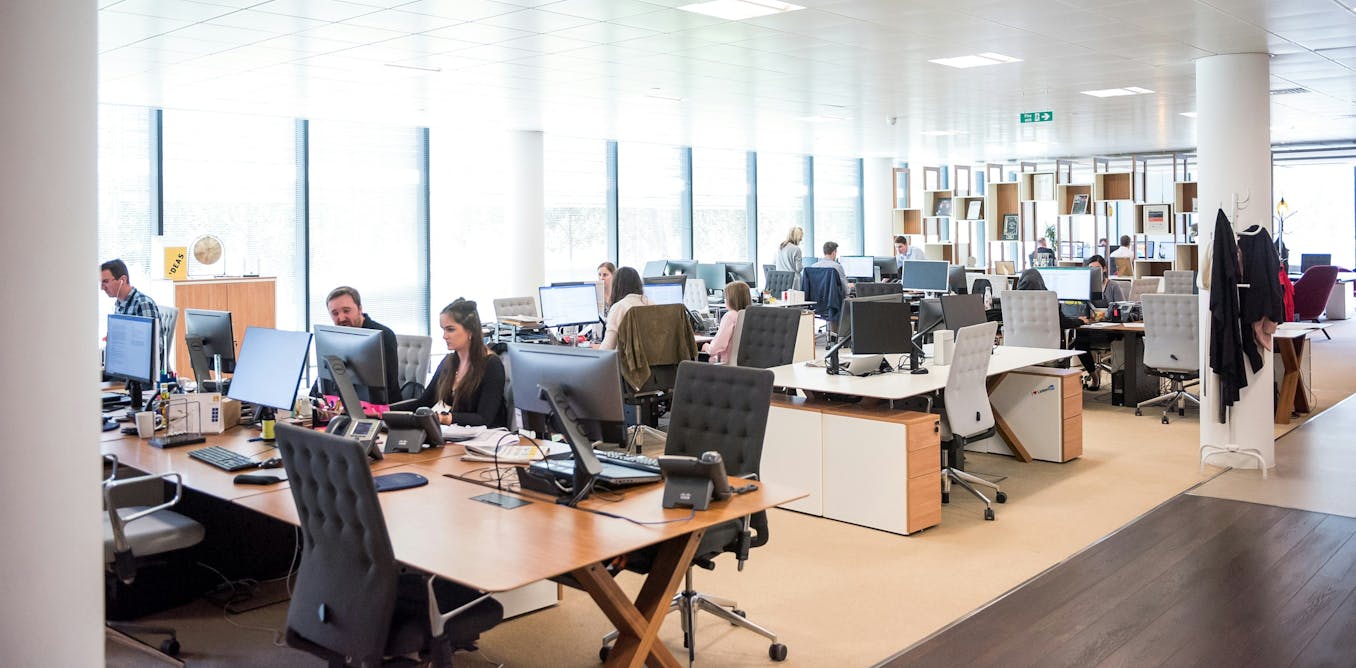
Open plan offices often fall short in supporting concentrative work activities. (Photo by Oli … [+]
Today, workers are seeking the best of both worlds from offices. While the top reason people cite for coming in is to spend time with other people, 15% say their primary objective is to find a quiet place to work. This is largely due to the prevalence of distractions at home, with 52% of people who have used Herman Miller’s work-from-home ergonomic assessment citing “productivity/focus” as their top WFH challenge. As a result, offices need to support both socialization and concentration to support these new work patterns. Employees might want to connect with others in a coffee bar or community space in the office one hour and then isolate themselves to concentrate on a detailed spreadsheet the next.
This poses a challenge for many offices. The trend toward open office designs over the past few decades has created spaces that often lack areas free of visual and acoustic distractions. The solution for many organizations has been to install phone booths, which are often used by employees for significant durations. While most booths provide helpful spaces for supporting a video call, they aren’t well-suited to support concentrative work as they can be too confined and lacking in important ergonomic support for longer-duration work sessions.
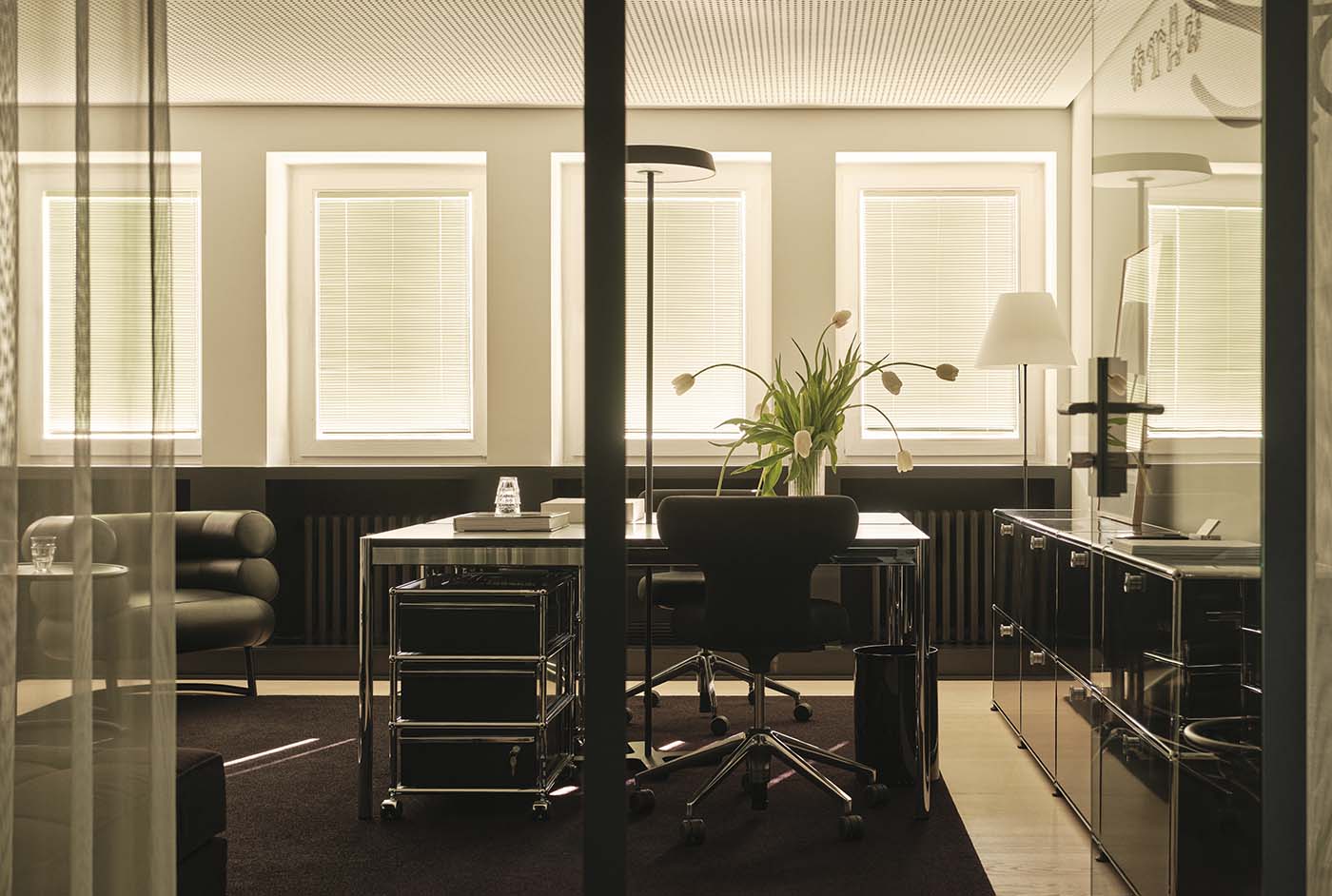
A “study hall” environment ensuring office workers a quiet space to concentrate.
Instead, organizations have begun providing other shared workspaces that guarantee quiet, ergonomic environments when needed. In some cases, this includes repurposing private offices that were once assigned to individuals into shared spaces that can be reserved online. In other cases, employers are creating quiet zones within workplaces, like a study hall, with the understanding that they are exclusively for focused work—no calls allowed. Alternatively, new types of acoustic pods and boundaries are available that are more spacious and offer ergonomic desks and chairs within the space, rather than the fixed-height tables and seating typical of traditional phone booths.
Enclosures that include ergonomic furnishings can support concentration better than traditional … [+]
Establishing options such as these not only supports employees seeking focus but also benefits those with unique sensory or cognitive needs. For instance, individuals on the autism spectrum may find it challenging to be productive in environments with excessive stimuli but can take advantage of a range of quieter locations to support various activities throughout the workday.
As offices continue to evolve, they’ll need to balance the spectrum of social and concentrated activities that workers seek to perform there. Employers aiming to support these activities and boost office utilization may be disappointed to find that the desks that once dominated the landscape of open offices are not particularly effective at supporting either end of the spectrum and are especially challenging for teams whose collaborative processes have shifted toward more digitally enabled, individual activities.
link
:max_bytes(150000):strip_icc()/KaterynaKovarzh-1ba05508b85442b499a1ac2a9e324e8b.jpg "How Color Psychology Affects Moods, Feelings, and Behaviors")